
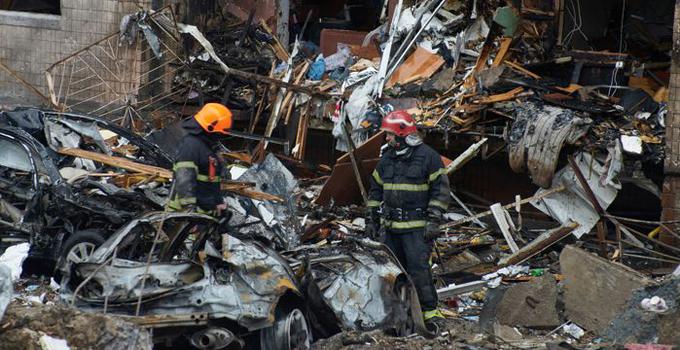
Photo: Dmytro Tolokonov/Unsplash
New research project studies the everyday reality of rescue services in war
When the war in Ukraine is described, the focus is often on soldiers at the front line. But rescue service personnel are also working in the midst of war — under shelling, among rubble, and close to people in acute distress.
Erik Melander, Professor of War Studies at the Swedish Defence University, will now investigate how the psychological strain of war affects rescue service personnel and the ability to retain and recruit staff.
The project is funded by the Swedish Civil Contingencies Agency and will run from 2026 to 2028 in collaboration with the State Emergency Service of Ukraine and Swedish rescue service organisations.
“The rescue services are crucial to society’s resilience, both in war and in peacetime. In Ukraine, personnel are working under extreme conditions where mortal danger, lack of resources, and difficult ethical dilemmas are part of everyday life. We want to understand how this affects their willingness and ability to remain in the profession”, says Erik Melander.
Moral stress and difficult decisions in everyday work
The study will examine several forms of psychological strain. It is not only about the risk of injury or death, but also about prolonged stress, exhaustion, and moral stress.
Moral stress can arise when rescue personnel are forced to make difficult decisions about who should receive help first when resources are insufficient to assist everyone.
One key question in the project is how this strain affects workforce sustainability. Who is able to remain in the profession? Who chooses to leave? And what is required for new employees to seek work in an environment that may be life-threatening?
A culture of silence may worsen mental ill health
The project will also examine how gender roles and perceptions of masculinity influence the working environment within the rescue services.
In many organisations, there is a culture in which employees are expected to “just get on with it”, making it difficult to talk about mental ill health or seek support.
“If the prevailing ideals dictate that you must always be strong, there is a risk that people suffer in silence. This can have serious consequences both for the individual and for the organisation”, says Erik Melander.
Interviews and surveys to provide a broad picture
The project combines surveys with in-depth interviews in order to build as comprehensive a picture as possible.
Two major surveys will be conducted: one aimed at managers and decision-makers, and another targeting current and former rescue service employees. In addition, interviews will be carried out with rescue service personnel about their experiences and working lives.
The aim is to identify which forms of training, leadership, peer support, and professional psychological support can reduce the risk of stress and trauma.
Experiences from Ukraine may strengthen Swedish preparedness
Erik Melander believes that the findings may also prove significant beyond Ukraine. In Sweden, discussions are ongoing about how society should cope with crises, disasters, and ultimately war.
“By learning from Ukraine’s experiences under extreme pressure, we can strengthen preparedness in other countries as well. Fundamentally, this is about taking care of those who take care of the rest of us”, he says.
More information about the research project
Page information
- Published:
- 2026-05-08
- Last updated:
- 2026-06-11